On the Move
The days when vehicle branding was about just sticking a vinyl wrap on the side of a delivery van or painting a logo on the door of a local bus are long gone. We’re now in the era of vehicle digital signage, born out of the convergence of mobility, IoT connectivity and advanced display technology. It’s a rapidly expanding field.
From dynamic ride share toppers through to smart public transit fleets and commercial delivery vehicles doing double duty as rolling billboards, the market is clearly expanding in terms of fleet size.As fleet operators and OEMS look for ways to get the most out of their assets, let’s take a look at the key global trends that are shaping the vehicle digital signage market.
1. The Rise of Fleet Monetization via Smart Exterior Displays
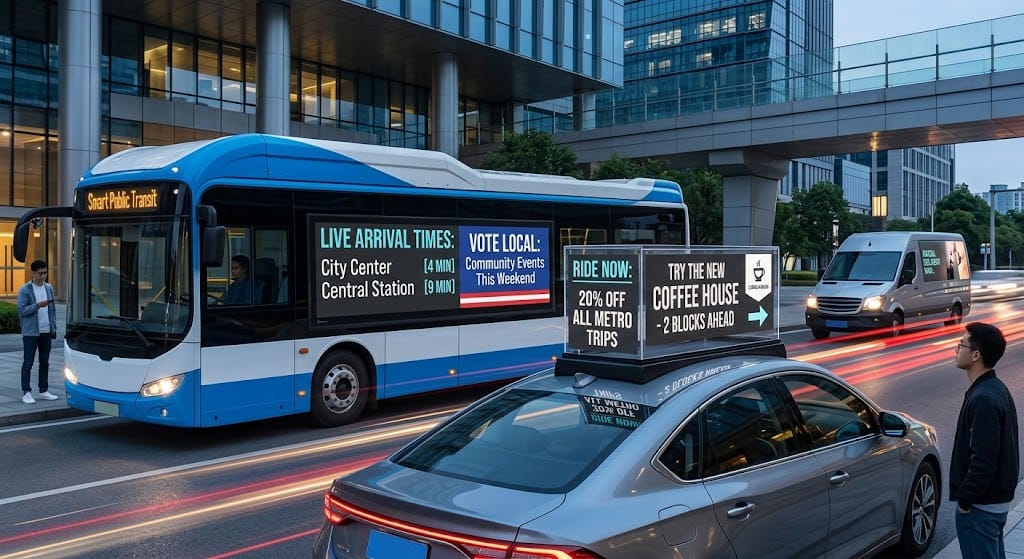
One of the most profitable shifts in the commercial transport space is the move to exterior mounted dynamic screens. Fleet operators are no longer just moving goods and people, they’re turning their vehicles into a programmable, revenue generating mobile media network.Dynamic Taxi and Ride Share: Smart, weather resistant LED and high brightness LCD screens on the taxis and ride share vehicles in the fleet can be used to change the ads based on GPS location, time of day and local events.
Targeted Geo-Fencing: a delivery van driving through a downtown shopping district can trigger promotions for the stores in the area as it passes, turning idle traffic time into a very targeted marketing opportunity.
2. Upgraded Passenger Experience and Real-Time Transit Info
Within the public bus, coach and corporate shuttle environment digital signage has moved on from the basic text only stop announcements to become full fledged cloud managed infotainment systems.Contextual Passenger Feeds: Modern interior displays can provide live transit information, pulling in GPS and GTFS (General Transit Feed Specification) data to show you real time arrivals, connections and any service disruptions.
Balancing ads and utility: Transit authorities are using smart CMS’s to split their screen time between essential safety messages, community messages and carefully controlled paid advertising. It’s about maintaining passenger trust whilst also generating some additional revenue.
3. OEM Integration vs. The Aftermarket Retrofit Boom
The vehicle digital signage market is currently bifurcating into two distinct arenas:OEM integration: the OEMS are increasingly building their own native display and connectivity architectures into the new commercial platforms (particularly the electric buses and urban delivery vehicles) with the screen being a core part of the platform rather than an afterthought.
The Aftermarket Retrofit Channel: For existing fleets, modular, ruggedised retrofit kits are all the rage. The fleet manager’s preference is for plug-in kits that are vibration resistant, have a wide thermal operating range and have sunlight readable panels that can cope with the physical rigors of the road.
4. Edge Resilience and Cloud-First Content Management
Managing content across a moving fleet brings its own set of infrastructure issues, the most significant of which is intermittent connectivity.Offline playback capability: modern vehicle signage is all about edge computing. The media players have plenty of local storage so that pre-scheduled media and emergency safety messages will continue to play through a dead zone or tunnel.
Centralised Fleet Control: Cloud first CMS platforms enable the fleet manager to push out global content updates, diagnostic checks and emergency alert overrides to hundreds of vehicles at the same time from a single dashboard.
5. Regulatory Evolution and Data Security
As vehicle screens get smarter and more interactive the regulatory regimes around the world are starting to catch up. It’s no longer just about the passive safety of the outside screen (i.e. making sure you’re not distracted by a screen that’s too bright through the use of smart auto-dimming etc) but there is now a clear set of rules emerging in Europe and the Asia Pacific around data security, passenger privacy and content liability. You simply can’t deploy a system at scale without having a compliance ready system in place that protects the telemetry and the user data.Looking Ahead
Vehicle digital signage is no longer an experimental thing at all. It’s rapidly becoming an essential software driven asset class. As the hardware costs stabilise and the software platforms get smarter, the miles that are going to be driven by commercial and public fleets will double, creating a massive range of opportunities for communication, commerce and community.
Are you managing a fleet or looking at digital display integration for your business? What are you seeing in your market? Let’s talk about it in the comments below!